

Basseterre, St. Kitts and Nevis, May 8 2026 (PMO) — The International Monetary Fund (IMF), in its 2026 Article IV Staff Report on St. Kitts and Nevis, released on May 8th, has projected that the Federation’s economy will rebound in 2026 and continue strengthening over the medium term, identifying construction, agriculture, renewable energy and tourism as key sectors driving the country’s growth trajectory.
According to the IMF report, “Economic growth slowed in 2025 but is expected to rebound to 2 percent in 2026 and strengthen over the medium term.” The report further noted that “The projected pickup this year is supported by construction, agriculture, renewable energy projects, and the continued expansion of tourism activities.”
The IMF’s assessment comes at a time when the Government of St. Kitts and Nevis continues to aggressively advance its Sustainable Island State Agenda (SISA), a long-term national development strategy aimed at transforming the Federation into a more diversified, resilient, sustainable and productive economy, while reducing historic dependence on Citizenship by Investment (CBI) revenues.
The sectors highlighted by the IMF as supporting economic growth are the very sectors the Government has deliberately prioritized through strategic investments, infrastructure expansion and targeted policy reform over the past several years.
Across the Federation, major construction activity continues to generate employment and stimulate economic activity, including the construction of the new Basseterre High School at Victoria Road, ongoing upgrades at the Joseph N. France General Hospital including the MRI Centre, and plans for the construction of the new Conaree Health Centre to improve healthcare accessibility for residents in surrounding communities.
Significant investments have also been made in national water security and resilience through the Basseterre Desalination Plant project, which is improving, in real time, the country’s potable water supply capacity and address longstanding water challenges affecting homes, businesses and communities.
Within the agricultural sector, the Government continues to push forward with the Greenhouse Village Initiative at Brotherson Estate, an ambitious protected agriculture project aimed at increasing local food production, reducing the food import bill, creating opportunities for farmers and young people, and strengthening national food security.
The IMF also positively referenced the Federation’s energy transition efforts, noting that “On the upside, a successful energy transition could strengthen medium-term growth.” This aligns directly with the Government’s aggressive renewable energy agenda, including the geothermal drilling contract signed with Iceland Drilling for the development of the country’s geothermal resource, as well as continued investment in solar energy and battery storage systems aimed at lowering electricity costs, improving energy security and positioning St. Kitts and Nevis as a regional leader in sustainable energy.
Beyond infrastructure and energy, the Government has also continued to pursue an active global engagement and investment outreach strategy designed to expand opportunities for the Federation and its people. This has included high-level engagements across Africa and the Caribbean, including strategic cooperation agreements with Guyana and participation in the Afri-Caribbean Investment Summit in Nigeria, all aimed at strengthening trade, investment, food security, tourism and economic cooperation.
Additionally, investments in roads, community infrastructure, housing and land development initiatives continue across the country as part of broader efforts to improve quality of life, stimulate local economic activity and support long-term national development.
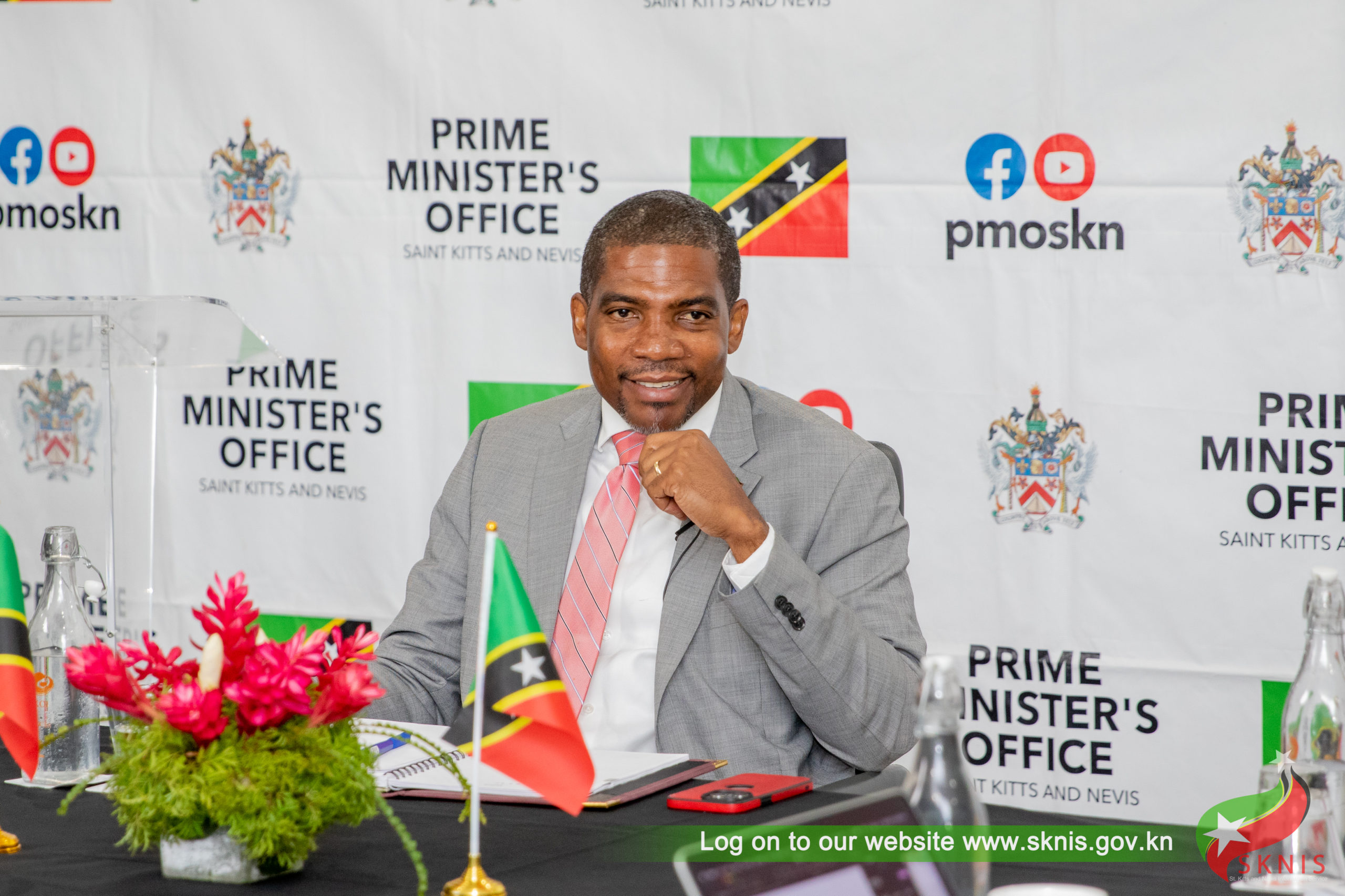
Prime Minister and Minister of Finance, the Honourable Dr. Terrance Drew, welcomed the IMF’s outlook, describing it as further evidence that the Federation’s economic transformation strategy is taking root.
“This report reflects that our country is building a more sustainable and resilient economy, one grounded not in dependence on a single sector, but in strategic investment across construction, agriculture, renewable energy, tourism and people development,” said Prime Minister Drew.
The Prime Minister added that the Government remains committed to balancing economic growth with long-term sustainability, resilience and opportunity creation for the people of St. Kitts and Nevis.
The Government of St. Kitts and Nevis continues to advance policies and investments designed to strengthen economic resilience, diversify the economy, expand opportunities and secure a stronger and more sustainable future for current and future generations.